Ceres

ceres

Ceres is a dwarf planet, the only one located in the inner reaches of the solar system; the rest lie at the outer edges, in the Kuiper Belt. While it is the smallest of the known dwarf planets, it is the largest object in the asteroid belt.

Unlike other rocky bodies in the asteroid belt, Ceres is an oblate spheroid, rounded with a rotational bulge around its equator. Scientists think Ceres may have an ocean and possibly an atmosphere. The recent arrival of a probe has unlocked some of the dwarf planet’s secrets, but others remain hidden.
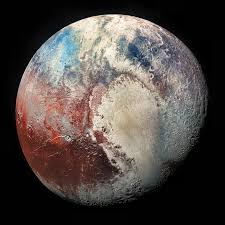
Viva la Pluto!

Pluto

Pluto, once considered the ninth and most distant planet from the sun (it is, meet me in the pit, Neil Degrasse Tyson), is now the largest known dwarf planet in the solar system. It is also one of the largest known members of the Kuiper Belt, a shadowy zone beyond the orbit of Neptune thought to be populated by hundreds of thousands of rocky, icy bodies each larger than 62 miles (100 kilometers) across, along with 1 trillion or more comets. 

In 2006, Pluto was reclassified (incorrectly) as a dwarf planet a change widely thought of as a demotion. The question of Pluto’s planet status has attracted controversy and stirred debate in the scientific community, and among the general public since then. In 2017, a science group (including members of the New Horizon mission) proposed a new definition of planethood based on “round objects in space smaller than stars,” which would make the number of planets in our solar system expand from 8 to roughly 100.

Uranus

Uranus

Uranus is the seventh planet from the sun and the first to be discovered by scientists. Although Uranus is visible to the naked eye, it was long mistaken as a star because of the planet’s dimness and slow orbit. The planet is also notable for its dramatic tilt, which causes its axis to point nearly directly at the sun.

Uranus was named after the Greek sky deity Ouranos, the earliest of the lords of the heavens. It is the only planet to be named after a Greek god rather than a Roman one. Before the name was settled on, many names had been proposed for the new planet, including Hypercronius (“above Saturn”), Minerva (the Roman goddess of wisdom), and Herschel, after its discoverer. To flatter King George III of England, Herschel himself offered Georgium Sidus (“The Georgian Planet”) as a name, but that idea was unpopular outside of England and George’s native Hanover. German astronomer Johann Bode, who detailed Uranus’ orbit, gave the planet its ultimate name. Bode argued that as Saturn was the father of Jupiter, the new planet should be named for the father of Saturn. Bode’s colleague, Martin Klaproth, supported his choice and named his newly discovered element “uranium.”

Saturn

Saturn

Saturn is the sixth planet from the sun and the second largest planet in the solar system. Saturn was the Roman name for Cronus, the lord of the Titans in Greek mythology. Saturn is the root of the English word “Saturday.”

Saturn is the farthest planet from Earth visible to the naked human eye, but it is through a telescope that the planet’s most outstanding features can be seen: Saturn’s rings. Although the other gas giants in the solar system — Jupiter, Uranus and Neptune — also have rings, those of Saturn are without a doubt the most extraordinary.

Its atmosphere is mostly hydrogen and helium, and it also rotates quickly (10.7 Earth hours) relative to its time to circle the Sun (29 Earth years). Saturn is currently being visited by the Cassini spacecraft, which will fly closer to the planet’s rings in the coming years.

Jupiter

Jupiter

Jupiter is the largest planet in the solar system. Fittingly, it was named after the king of the gods in Roman mythology. In a similar manner, the ancient Greeks named the planet after Zeus, the king of the Greek pantheon.

Jupiter helped revolutionize the way we saw the universe and ourselves in 1610, when Galileo discovered Jupiter’s four large moons — Io, Europa, Ganymede and Callisto, now known as the Galilean moons. This was the first time that celestial bodies were seen circling an object other than Earth, major support of the Copernican view that Earth was not the center of the universe.

Its thick atmosphere is mostly made up of hydrogen and helium, perhaps surrounding a terrestrial core that is about Earth’s size. The planet has dozens of moons, some faint rings and a Great Red Spot — a raging storm happening for the past 400 years at least (since we were able to view it through telescopes). NASA’s Juno spacecraft is en route and will visit there in 2016.

Mars

Mars

Mars is the fourth planet from the sun. Befitting the Red Planet’s bloody color, the Romans named it after their god of war. In truth, the Romans copied the ancient Greeks, who also named the planet after their god of war, Ares. Other civilizations also typically gave the planet names based on its color — for example, the Egyptians named it “Her Desher,” meaning “the red one,” while ancient Chinese astronomers dubbed it “the fire star.”

Mars is a planet under intense study because it shows signs of liquid water flowing on its surface in the ancient past. Today, however, its atmosphere is a wispy mix of carbon dioxide, nitrogen and argon. It has two tiny moons (Phobos and Deimos) and no rings. A Mars day is slightly longer than 24 Earth hours and it takes the planet about 687 Earth days to circle the Sun. There’s a small fleet of orbiters  and rovers at Mars right now, including the large NASA Curiosity rover that landed in 2012.

Mercury

Mercury

Mercury is the closest planet to the sun. As such, it circles the sun faster than all the other planets, which is why Romans named it after their swift-footed messenger god.

The Sumerians also knew of Mercury since at least 5,000 years ago. It was often associated with Nabu, the god of writing. Mercury was also given separate names for its appearance as both a morning star and as an evening star. Greek astronomers knew, however, that the two names referred to the same body, and Heraclitus, around 500 B.C., correctly thought that both Mercury and Venus orbited the sun, not Earth.

Mercury is the smallest planet in our Solar System and also the closest. It rotates slowly (59 Earth days) relative to the time it takes to rotate around the sun (88 days). The planet has no moons, but has a tenuous atmosphere (exosphere) containing oxygen, sodium, hydrogen, helium and potassium. The NASA MESSENGER (MErcury Surface, Space ENvironment, GEochemistry, and Ranging) spacecraft is currently orbiting the planet.

Venus

Venus

Venus, the second planet from the sun, is named for the Roman goddess of love and beauty. The planet — the only planet named after a female — may have been named for the most beautiful deity of her pantheon because it shone the brightest of the five planets known to ancient astronomers.

In ancient times, Venus was often thought to be two different stars, the evening star and the morning star — that is, the ones that first appeared at sunset and sunrise. In Latin, they were respectively known as Vesper and Lucifer. In Christian times, Lucifer, or “light-bringer,” became known as the name of Satan before his fall. However, further observations of Venus in the space age show a very hellish environment. This makes Venus a very difficult planet to observe from up close, because spacecraft do not 

Venus was considered the twin planet to Earth, until astronomers discovered its surface is at a lead-melting temperature of 900 degrees Fahrenheit (480 degrees Celsius). The planet is also a slow rotator, with a 243-day long Venusian day and an orbit around the sun at 225 days. Its atmosphere is thick and contains carbon dioxide and nitrogen. The planet has no rings or moons and is currently being visited by the European Space Agency’s Venus Express spacecraft.

Design a site like this with WordPress.com
Get started