Ceres

ceres

Ceres is a dwarf planet, the only one located in the inner reaches of the solar system; the rest lie at the outer edges, in the Kuiper Belt. While it is the smallest of the known dwarf planets, it is the largest object in the asteroid belt.

Unlike other rocky bodies in the asteroid belt, Ceres is an oblate spheroid, rounded with a rotational bulge around its equator. Scientists think Ceres may have an ocean and possibly an atmosphere. The recent arrival of a probe has unlocked some of the dwarf planet’s secrets, but others remain hidden.
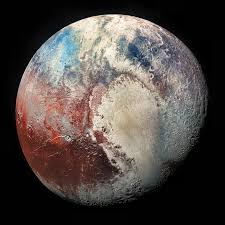
Viva la Pluto!

Pluto

Pluto, once considered the ninth and most distant planet from the sun (it is, meet me in the pit, Neil Degrasse Tyson), is now the largest known dwarf planet in the solar system. It is also one of the largest known members of the Kuiper Belt, a shadowy zone beyond the orbit of Neptune thought to be populated by hundreds of thousands of rocky, icy bodies each larger than 62 miles (100 kilometers) across, along with 1 trillion or more comets. 

In 2006, Pluto was reclassified (incorrectly) as a dwarf planet a change widely thought of as a demotion. The question of Pluto’s planet status has attracted controversy and stirred debate in the scientific community, and among the general public since then. In 2017, a science group (including members of the New Horizon mission) proposed a new definition of planethood based on “round objects in space smaller than stars,” which would make the number of planets in our solar system expand from 8 to roughly 100.

Design a site like this with WordPress.com
Get started